
Seaforth House: What it means to “respect the local context” in design 30.05.26
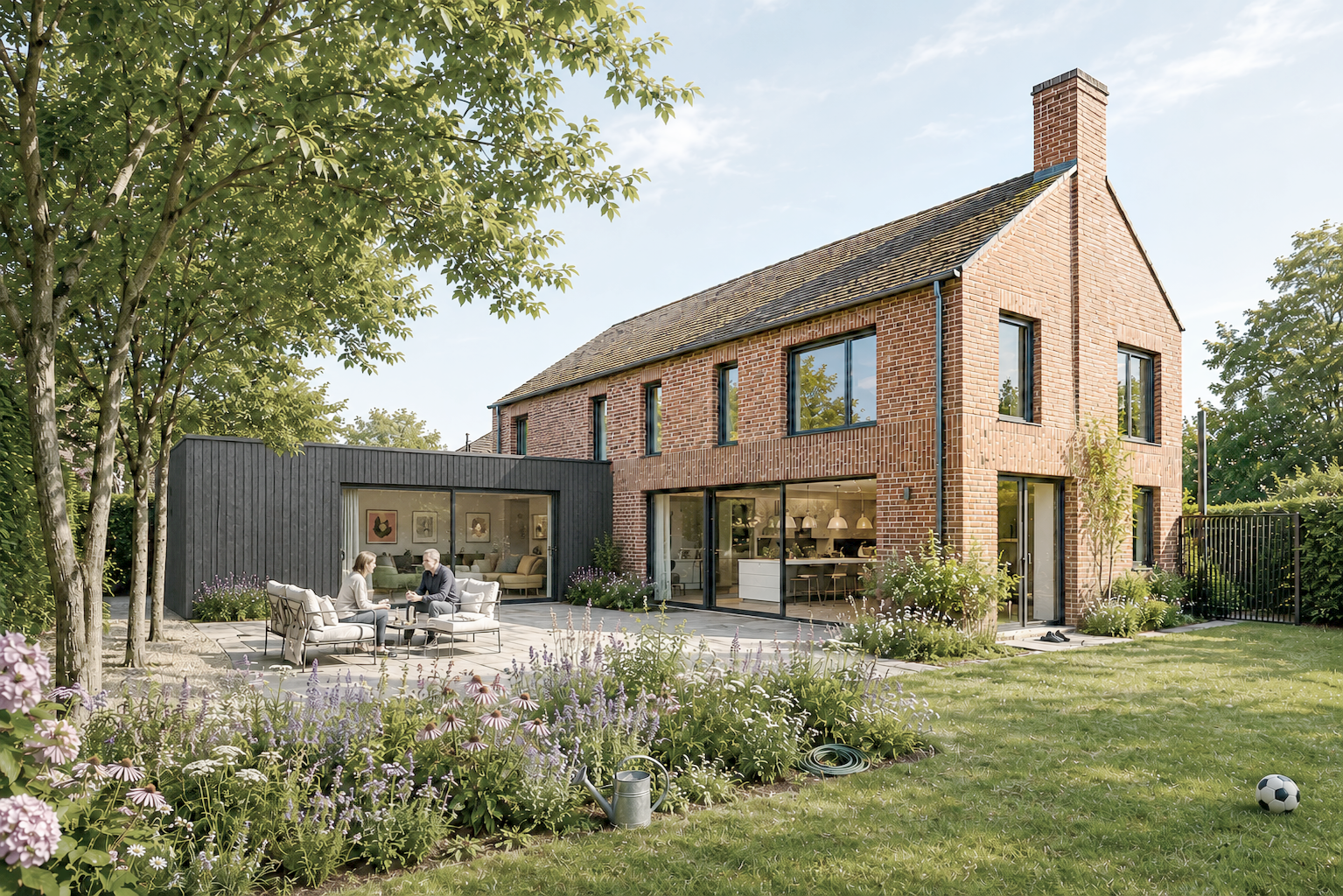
Seaforth House, Rear Garden
At House Form, respecting local context is really about understanding the place you’re building in. It means paying attention to the climate, the history, the way people use the area and the details that give it its character. Instead of applying a standard solution, the design grows from what’s already there.
Most of the design comes from time spent on site like walking the streets, how the light changes and what the community values. Those observations often guide the project more than anything written on paper.
Respecting context doesn’t mean copying the surrounding buildings, it means creating something that is complementary alongside them. That might involve using local materials, working with local makers or considering cultural references.
How Seaforth House shows contextual design
Seaforth House uses contextual design in an understated way. It replaces a worn 1920s home, but it keeps hold of the things that make Orford feel like Orford, such as the hedgerows next to the street, the brick gables and the chimney. From the road, the house doesn’t dominate the street, it blends in with the rest of the village.
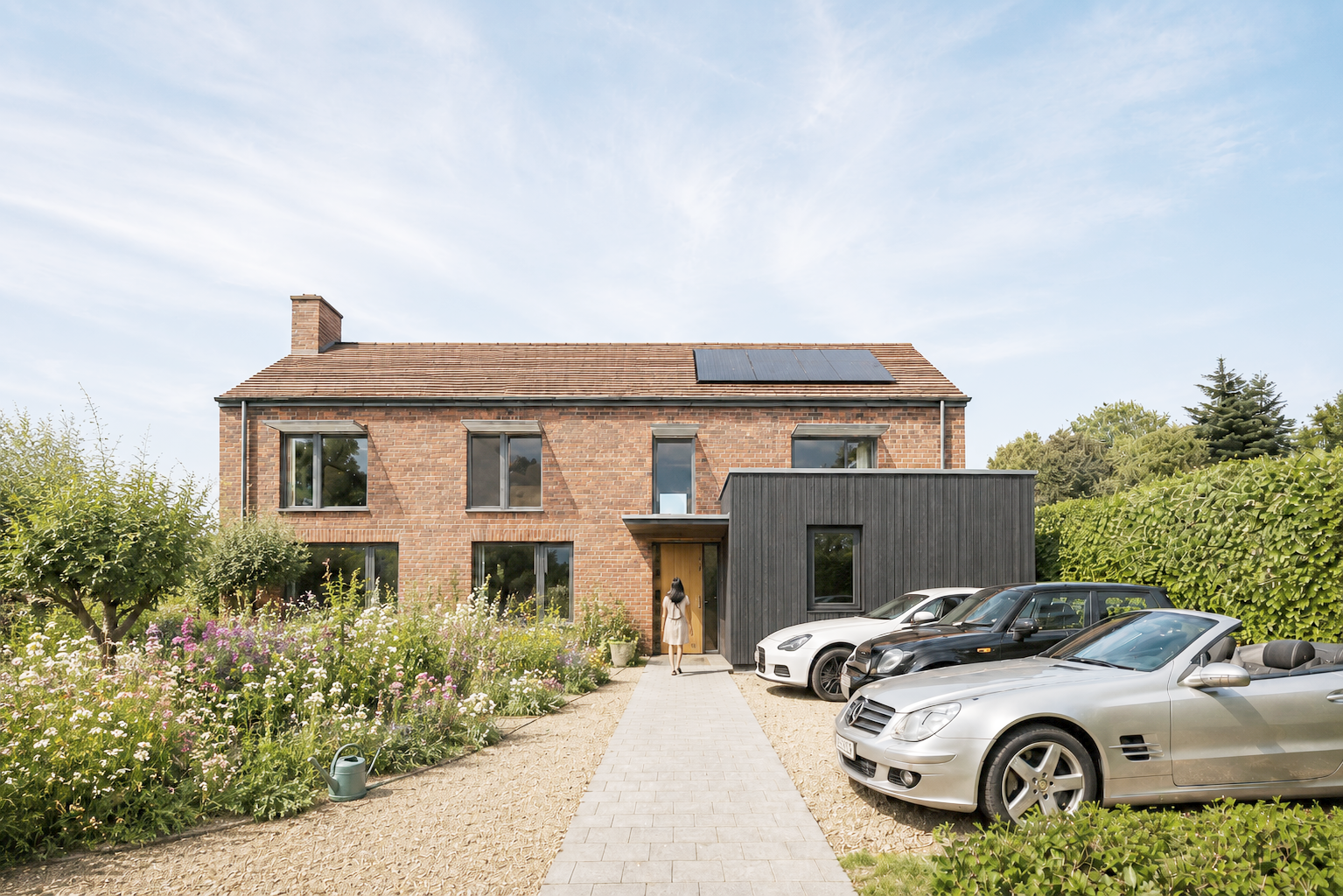
Seaforth House, Front Garden
Within the plot, the design becomes more personal. The rooms are arranged around a south-facing courtyard, giving the family a mix of shared and peaceful spaces. It has sheltered terraces and the orientation of the house makes the most of the corner site without it being out of place.
Development scheme for six new houses neighbouring Seaforth House
Seaforth House has set the initial approach for a new development scheme of six houses neighbouring it. It established how new homes should sit within the village without implying anything about who might live in them. That’s why the wording we use focuses on the design and its relationship to the place, rather than suggesting it’s being built for a particular person. Whether it’s eventually sold or becomes a family home, the design stands independently of that.
We’re currently bidding on the construction of the six-home scheme on Front Street to continue this way of thinking. The site sits just outside the Conservation Area, surrounded by a mix of detached houses, semis and bungalows. Respecting local context here means getting the basics right, size, scale, density and orientation, so the new homes feel like an extension of the existing pattern. The layout responds to the way the village moves along Ferry Road and Nightingale Piece.
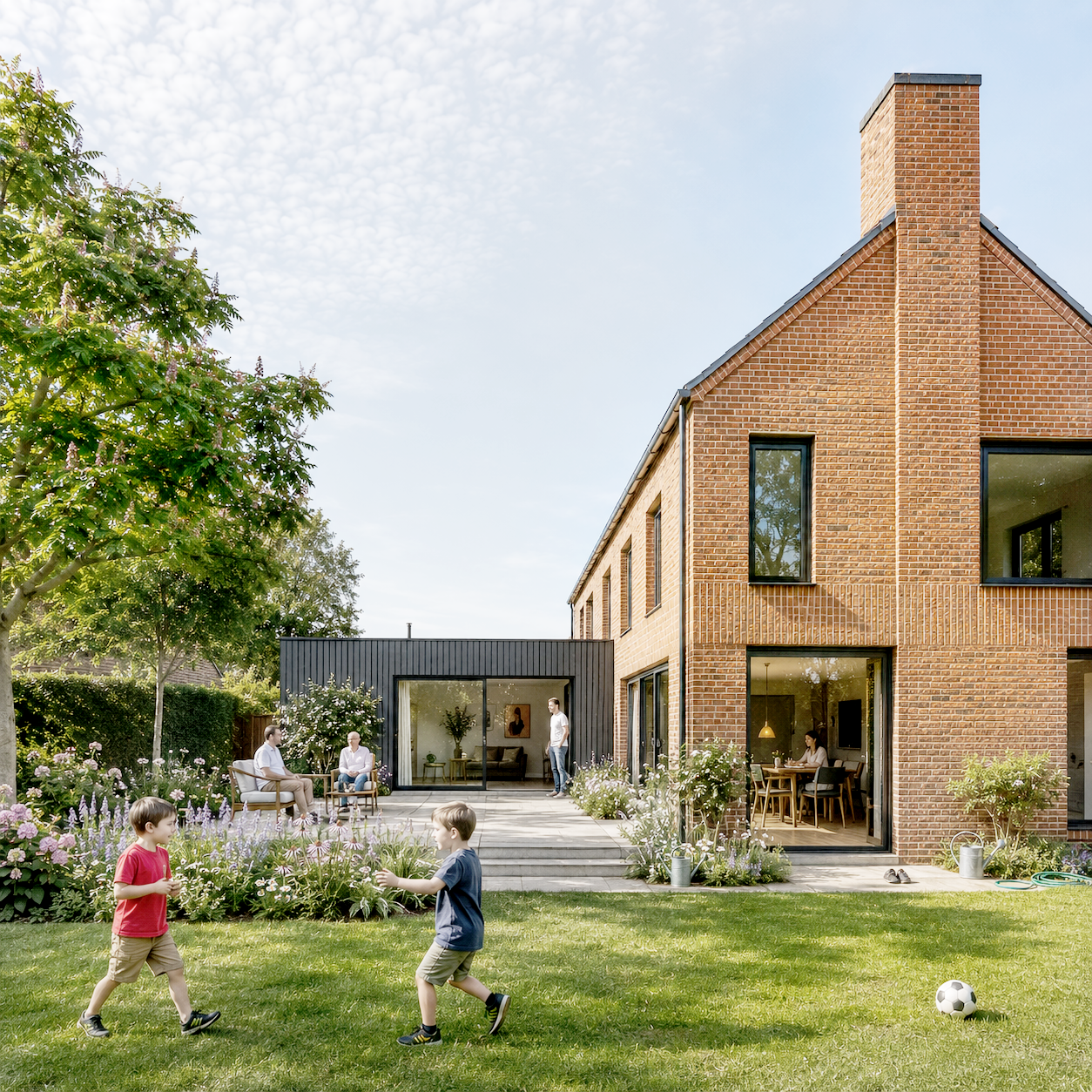
Seaforth House, Rear Garden
Heritage comes through in the materials and detailing. Orford’s familiar palette of red brick, buff tones, render and pitched roofs provides a starting point, while the detailing is handled in a way that’s contemporary but still connected to the village.
For Plot 1, the intention is for the dwelling to remain set within its landscape, with planting and boundary treatments doing much of the work in softening its presence. Allowing only partial views of the building helps it align with the informal, green edges found along nearby lanes.
The terrace has a more defined role in shaping the street edge. Its position near the path introduces an enclosure that reflects the Conservation Area, while the setback provides a transition toward the more open suburban context to the west. This balance supports both the public realm and the privacy of the residents.