
Rowley House.
A Contemporary Reimagining of a 1970s Home, Warwickshire
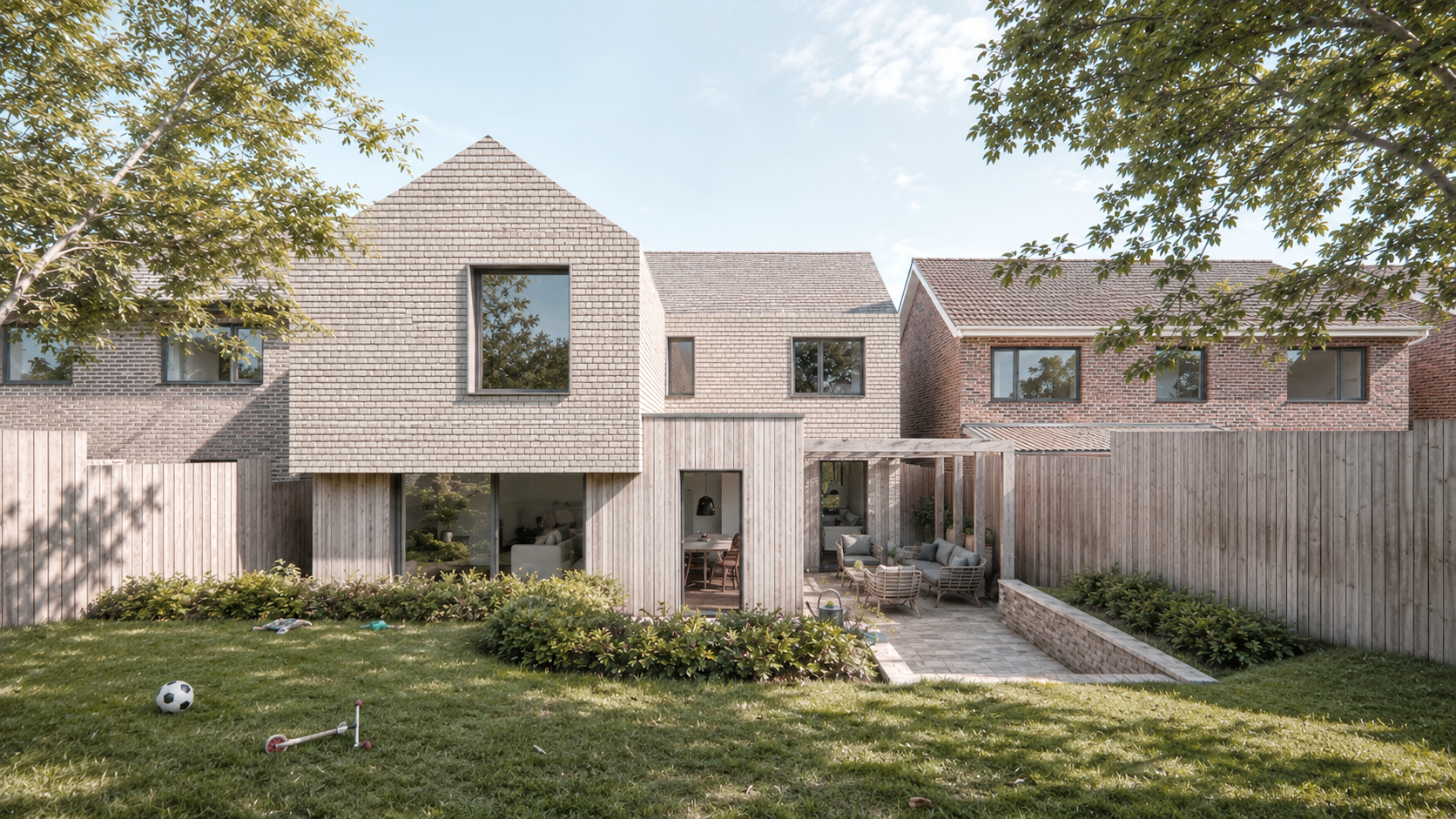
“Conceived as a repeatable model for upgrading underperforming suburban housing stock across Warwickshire and the Cotswolds, the project demonstrates how existing homes can be adapted sustainably without demolition.”
Rowley House, Warwickshire
Project Summary
Location: Stratford-upon-Avon, Warwickshire
Type: Deep Retrofit, Extension and Residential Remodelling
Size: 190sqm
Rowley House is the complete transformation of a dated 1970s detached house in Stratford-upon-Avon, Warwickshire. The project reimagines the existing suburban dwelling through a fabric-first retrofit strategy, introducing a contemporary architectural language rooted in local Cotswold materiality and passive environmental design principles.
The proposal replaces the fragmented appearance of the original property with a cohesive composition formed of a monolithic upper volume clad in Cotswold stone tile, sitting above a lighter timber-clad ground floor. The design significantly improves thermal performance, airtightness, daylight, and spatial connectivity while creating a modern family home better suited to contemporary living.
Conceived as a repeatable model for upgrading underperforming suburban housing stock across Warwickshire and the Cotswolds, the project demonstrates how existing homes can be adapted sustainably without demolition.
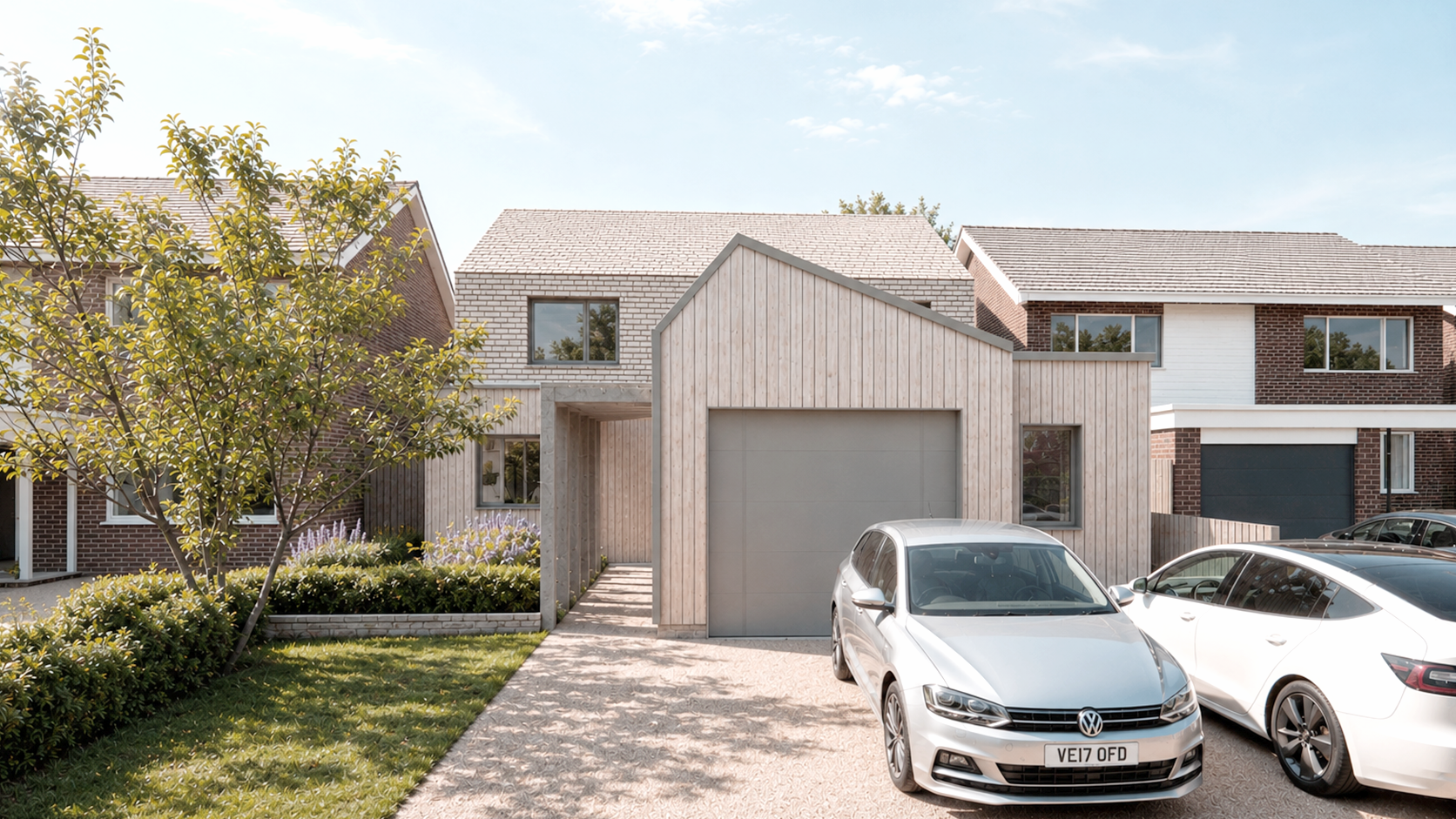
“While contemporary in expression, the scheme remains informed by its Warwickshire context. The use of Cotswold stone tile references the wider regional vernacular, while the restrained massing and carefully controlled scale respond sensitively to neighbouring properties and the adjacent conservation area boundary.”
Rowley House, Warwickshire
Project Description
Rowley House is the sensitive but transformative remodelling of an existing 1970s detached house located within an established suburban neighbourhood in Stratford-upon-Avon, Warwickshire. Positioned on the edge of the Stratford-upon-Avon Conservation Area, the project explores how dated suburban housing stock can be fundamentally reimagined through careful architectural intervention, material restraint, and deep environmental retrofit.
The existing property, while structurally sound, suffered from many of the shortcomings typical of speculative suburban housing of its era. Internally, the house was compartmentalised, poorly insulated, and disconnected from the garden, resulting in dark living spaces and limited adaptability for modern family life. Externally, the fragmented composition of the original garage, carport, and mixed roof forms created an incoherent street presence that lacked both identity and architectural clarity.
Rather than pursue demolition and rebuild, the project adopts a fabric-first retrofit approach that seeks to extend the life of the existing structure while dramatically improving its environmental performance and spatial quality. The proposal combines targeted extensions with a comprehensive reworking of the building envelope, introducing external insulation, improved airtightness, triple glazing, and underfloor heating throughout the home.
At the heart of the design is the creation of a cohesive architectural language that unifies the previously fragmented dwelling. The proposal introduces a contemporary solid upper volume clad in Cotswold stone tile, wrapping both roof and first floor to create a singular monolithic form. This approach reinterprets the materiality and proportions of traditional Cotswold architecture in a contemporary manner, allowing the upper level to read as a sculpted roof form rather than a conventional two-storey suburban house.
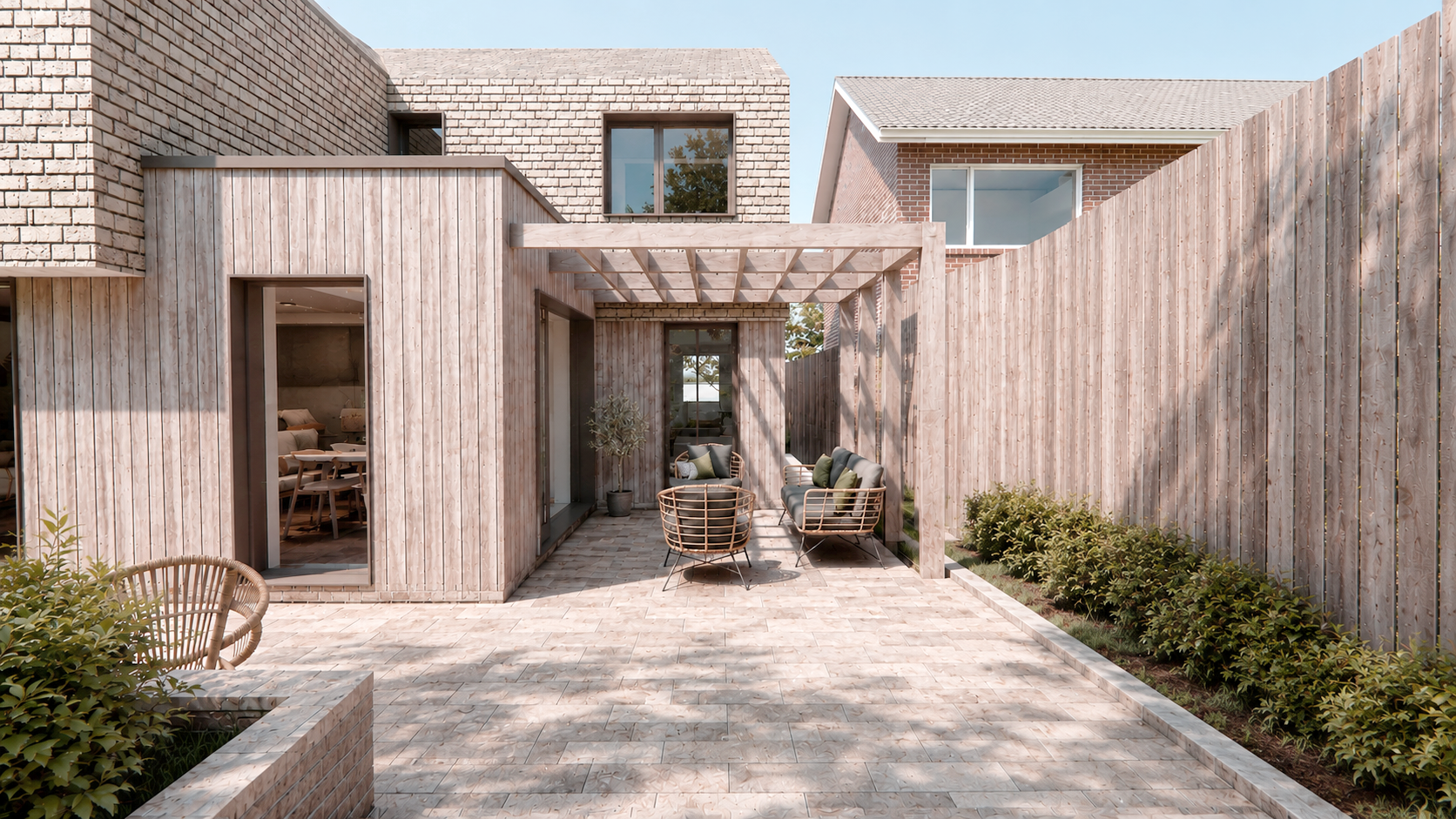
Beneath this heavier upper volume, the ground floor adopts a lighter and more tactile material expression through the use of pre-weathered thermally treated timber cladding. The timber elements are intended to soften and naturally weather over time,
reinforcing the distinction between the grounded base and the more solid masonry-like upper form.
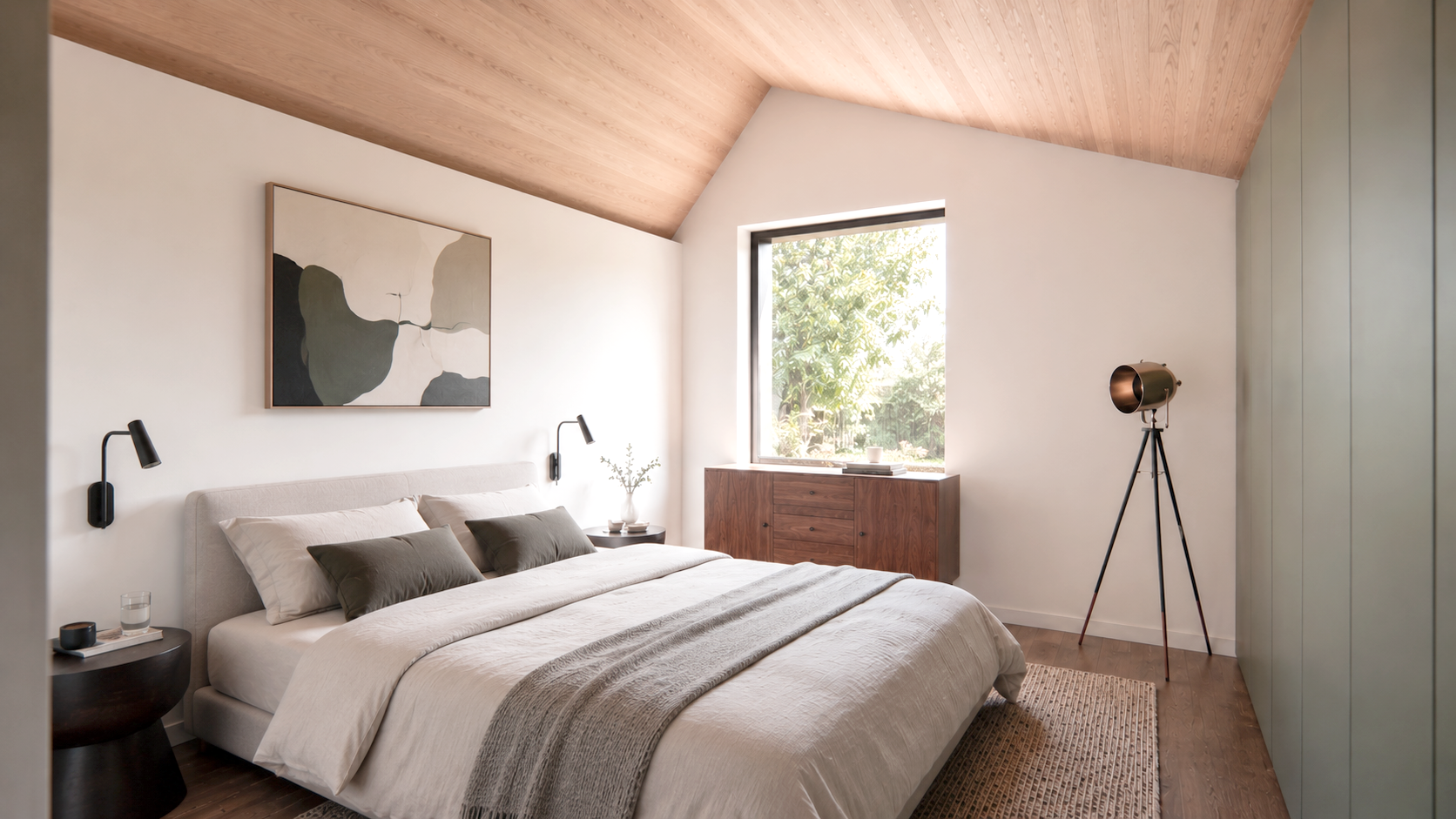
Deeply recessed openings are integrated within the overclad envelope, creating shadow depth and helping to mitigate solar gain during summer months through passive environmental control. Concealed gutters and restrained detailing further simplify the overall composition, allowing materiality, proportion, and form to become the defining architectural elements.
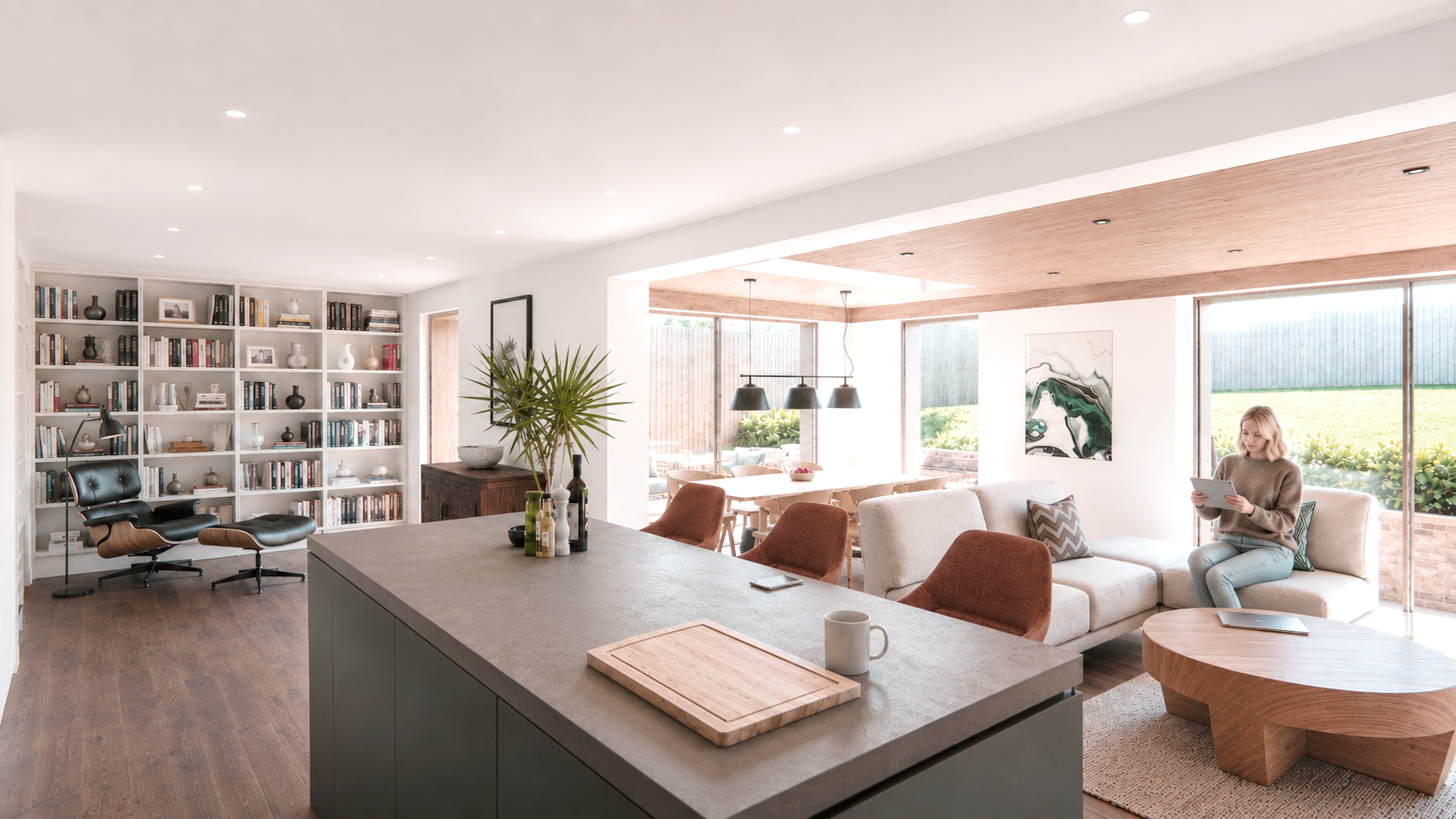
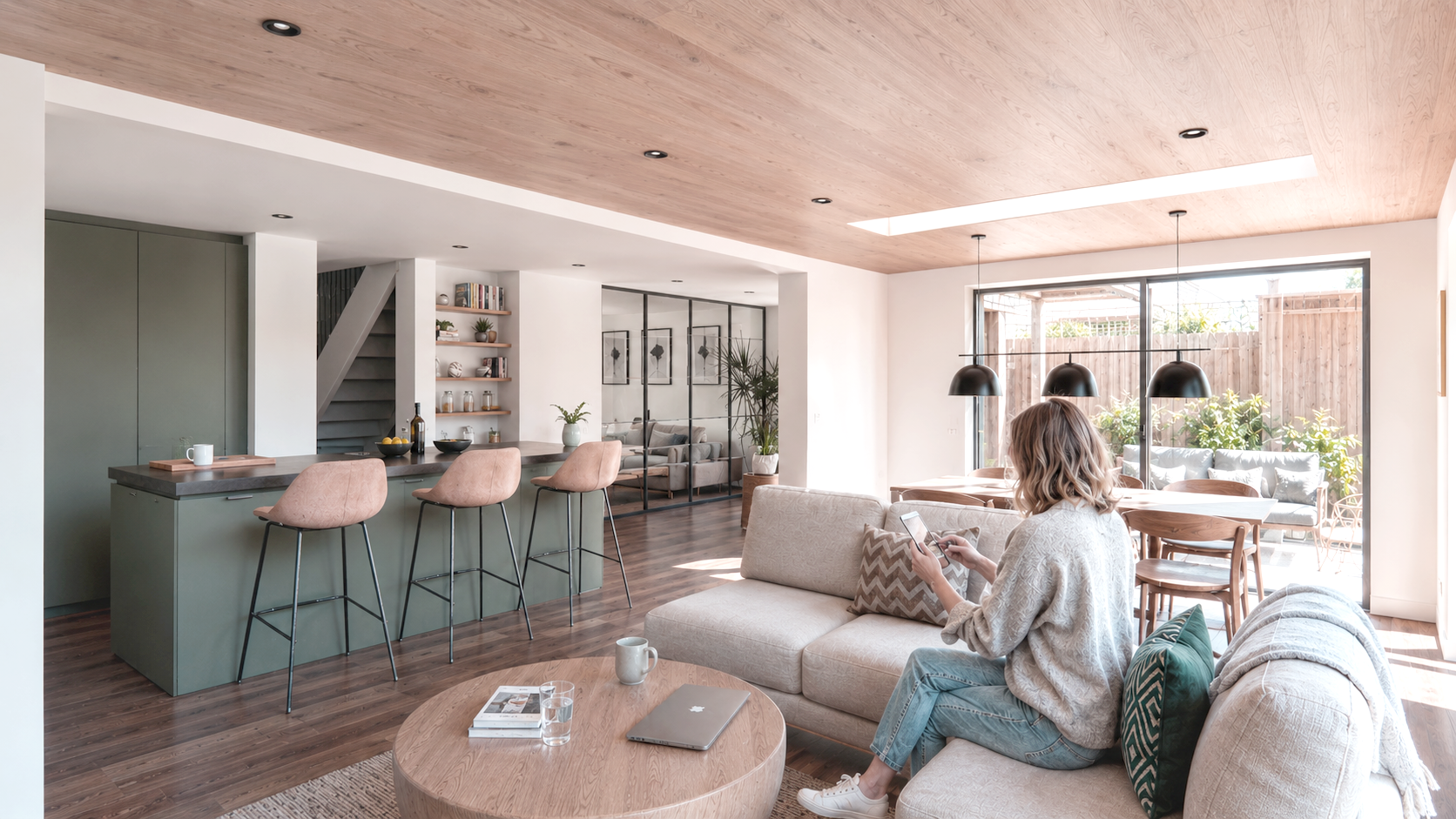
Internally, the layout has been comprehensively reorganised to support contemporary family living. A series of previously cellular rooms have been replaced with more open and connected living spaces centred around the kitchen, dining, and family areas. Large openings strengthen the relationship between the house and garden, bringing significantly greater levels of natural daylight into the plan while improving visual connectivity across the site.
The front elevation has also been carefully reconsidered through the removal of the existing garage and carport structures, which previously dominated the street-facing composition. In their place, the proposal introduces a clearer entrance sequence and a more unified architectural frontage that sits comfortably within the varied suburban character of Fordham Avenue.
While contemporary in expression, the scheme remains informed by its Warwickshire context. The use of Cotswold stone tile references the wider regional vernacular, while the restrained massing and carefully controlled scale respond sensitively to neighbouring properties and the adjacent conservation area boundary.
More broadly, Rowley House explores the potential for a repeatable architectural approach to the upgrading of 1970s suburban homes across Warwickshire and the Cotswolds. At a time when many existing houses suffer from poor thermal performance, inefficient layouts, and limited architectural identity, the project demonstrates how retrofit-led design can provide a sustainable alternative to demolition, extending the lifespan of existing housing stock while delivering homes that are better suited to contemporary living.